
Risk factors for developing pressure ulcers and their four stages of severity.

Risk factors for developing pressure ulcers and their four stages of severity.
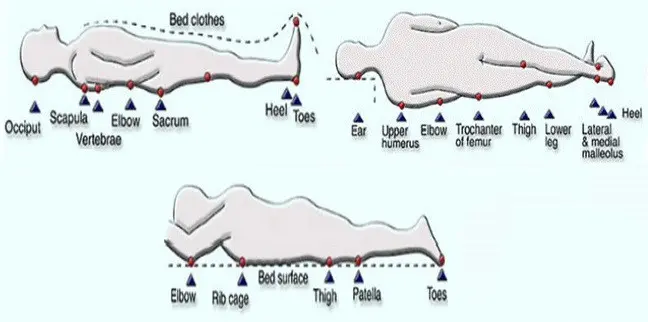
Risk Factors
- Bedridden patients who are unable to move themselves.
- Individuals who are underweight or overweight, causing uneven pressure distribution.
- Malnutrition and insufficient water intake, leading to dry and fragile skin.
- Patients with diabetes and vascular diseases who have blood circulation problems.
- Frequent skin contact with moisture, such as sweat, urine, and feces.
Severity Levels of Bedsores
- Stage 1: The skin is intact but turns red and does not fade when pressed. The patient may feel pain or itching.
- Stage 2: Partial or full loss of skin layers. It may appear as a blister or an open wound. This is the starting point for infection.
- Stage 3: The wound extends deep into the fat layer. It is wide and deep, and dead tissue may accumulate in the wound.
- Stage 4: Severe wound reaching the muscle and bone. There is a significant accumulation of dead tissue, posing a high risk of severe infection.
In addition, there are 2 other stages: Suspected Deep Tissue Injury (the skin turns purple or maroon, or forms a blood-filled blister while the skin remains unbroken) and Unstageable Pressure Ulcers (full loss of skin tissue, but the wound bed is covered by black dead tissue or eschar, making it impossible to determine the depth).